
Raku Pottery Firing
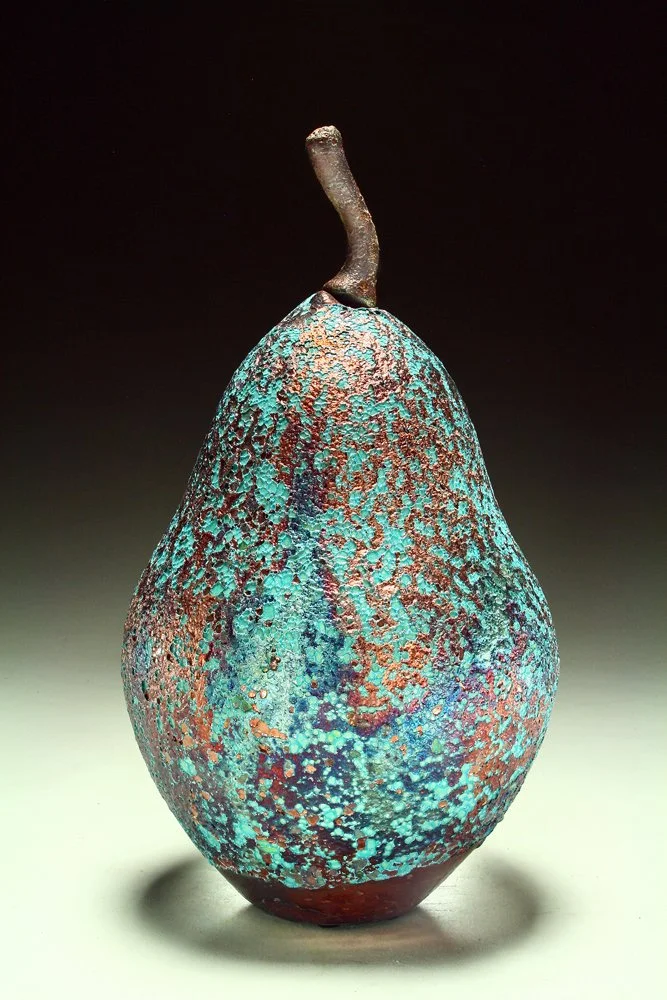
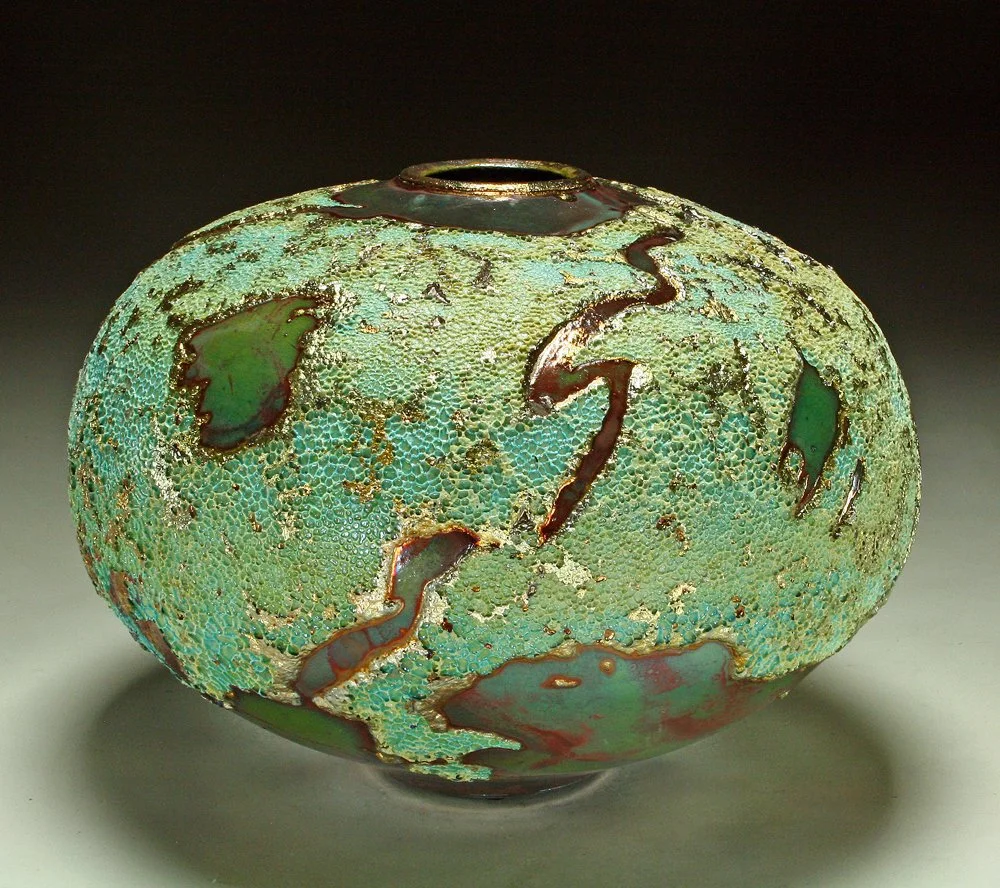
Raku firing was first done in Japan about 500 years ago. The original Japenese raku process was developed primarily for tea bowls with sizes generally no bigger than a pair of cupped hands. It was westernized in 1960 by a famous American ceramist named Paul Soldner. The original Japanese process allowed each piece to be removed from the kiln and cool in the open air or be quenched in water. Soldner serendipitously discovered a completely new look was achievable if the pieces were placed in combustibles after removing them from the kiln. This is called post-firing reduction.
I place my hot pieces in a metal chamber using newspaper as my combustible. By containing the fire, I am able to create the desired effects by placing a lid on the reduction chamber, smothering the flames and creating a carbon-rich environment. To me, the serendipity of this process is very exciting! When I open the container after about 30 minutes, it's like being a kid at Christmas as I never know for sure what the results will be!
Raku Wall Pieces
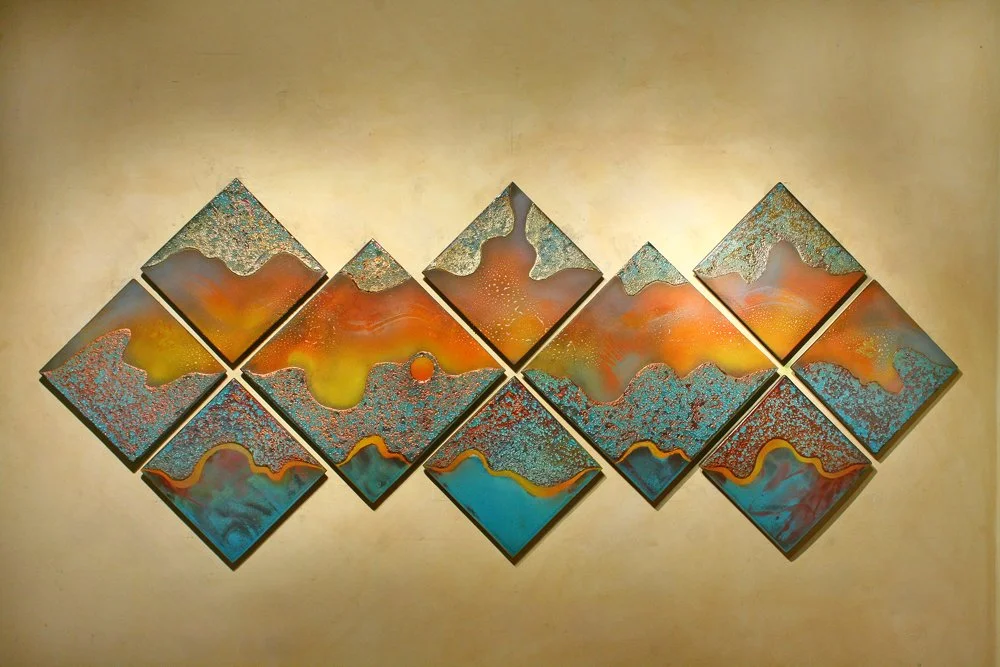
Most of my raku pottery tiles are individually cut 9" square from 3/8" thick slabs of clay. After drying, they are bisque fired standing upright in the kiln. Then I lay them out in the desired size and shape, and draw the pattern on them with a pencil. Using the pattern as a guide, I then apply underglazes and glazes in the desired areas. Each tile is created using various proprietary glazes along with commercial underglazes.


The tile pieces are then fired 3 at a time in the raku kiln. Once they ready for hanging, 4 loop tabs are chemically bonded to the back of each tile. After the bond cures, a wire is threaded through the tabs and secured, so the top of the wire on all of the tiles is 1 1/8" from the top edge when stretched tight. Then I hang the raku piece using 10 pound picture hooks. When I get the spacing correct, I take the tiles down and make a template for the potential customer to use when hanging in their space.
To see my full collection of available wall pieces as well as pieces that have sold please visit my raku wall pieces page or if you would like more information regarding my raku pottery or to schedule a visit to my studio please contact me.
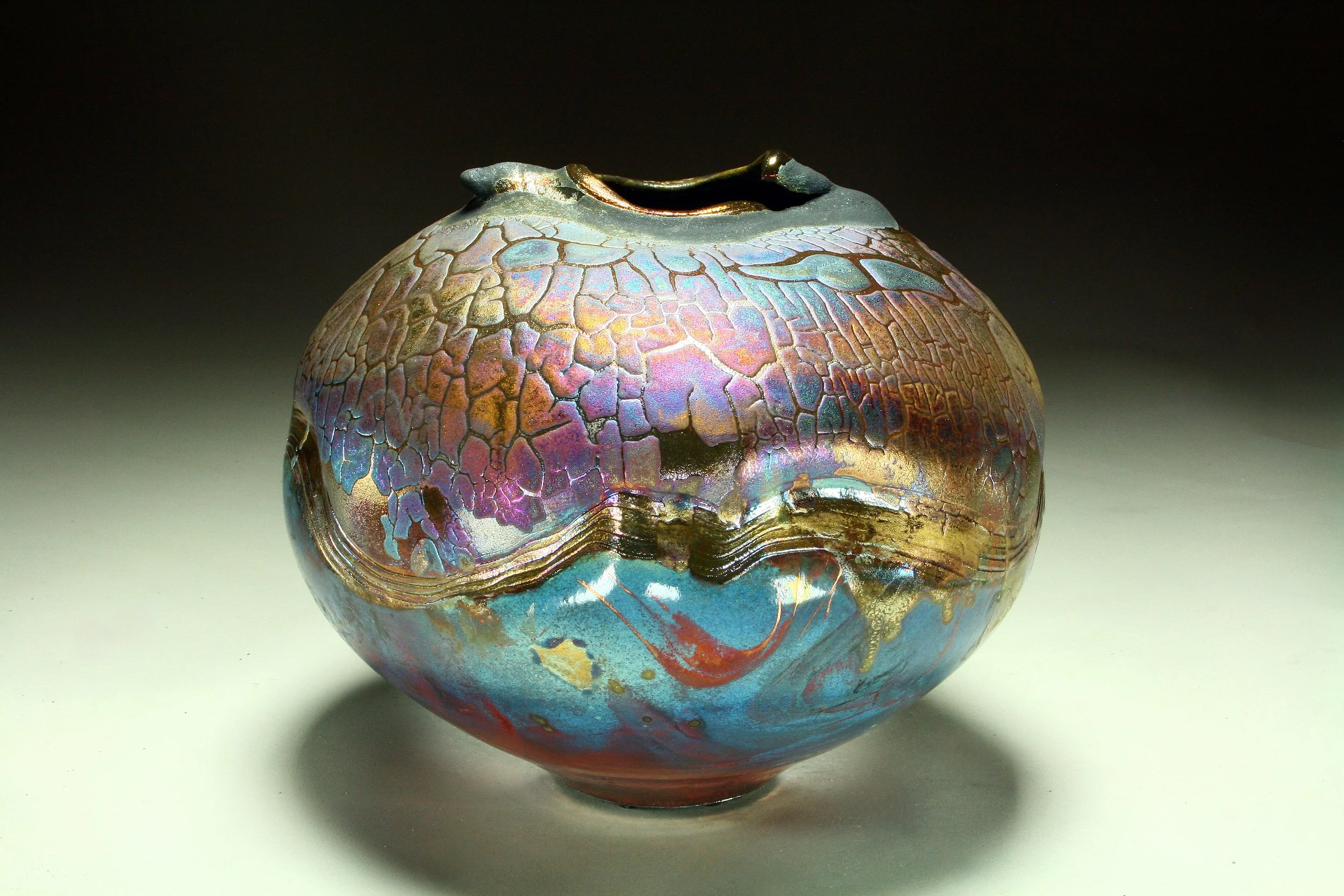
10”H x 12”W
This vessel was thrown on the potter’s wheel and altered when wet. It was then trimmed after drying about halfway. When completely dry it was bisque fired. After the bisque firing, it was glazed with a new proprietary glazes and raku fired.
More Raku Pottery Vessels
To learn more about raku pottery and my process please visit my raku firing page. To sign up for news & information regarding my exhibitions or monthly discounted raku pottery for sale please clickhere.